Rumi Match

The right match, in minutes.

Ditch the spreadsheets and start matching partners in minutes for mentoring, social learning, or change adoption programs with our AI-powered MatchIQ® algorithm, customizable to your program’s specific needs.

Successful programs start with high-quality matching

Chronus software with MatchIQ® technology makes it easy to create effective matches with proven methodology and an intelligent matching algorithm – mentor / mentee matching or peer to peer.

Rich mentor & mentee profiles

Rich employee profiles

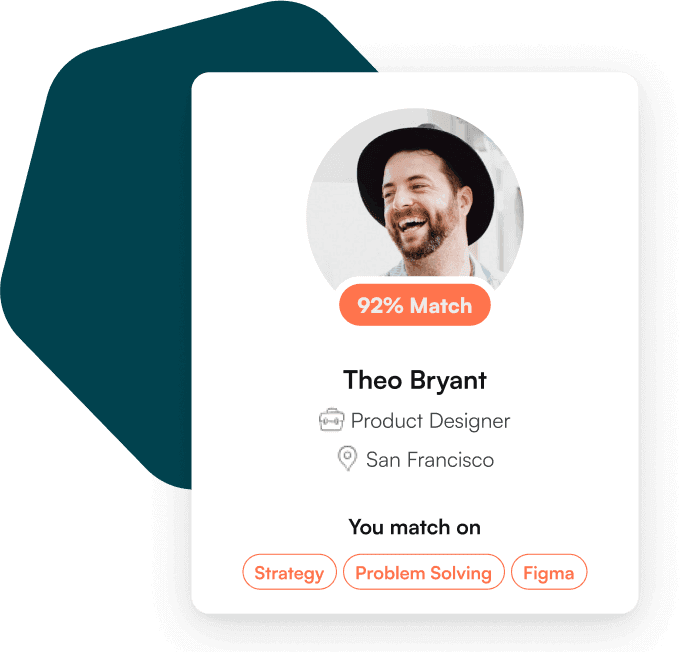
Create rich profiles in minutes, full of detailed information for mentorship matching or whatever type of program you’re running. With Chronus, participants can quickly create their own profiles or import profile data from a HRIS, LMS or other database.

I love the ability to schedule messaging and reminders. The matching algorithm has been such a life saver. I can’t imagine running a mentorship program without Chronus.

Texas A&M University
Recommended mentor matches

Recommended matches

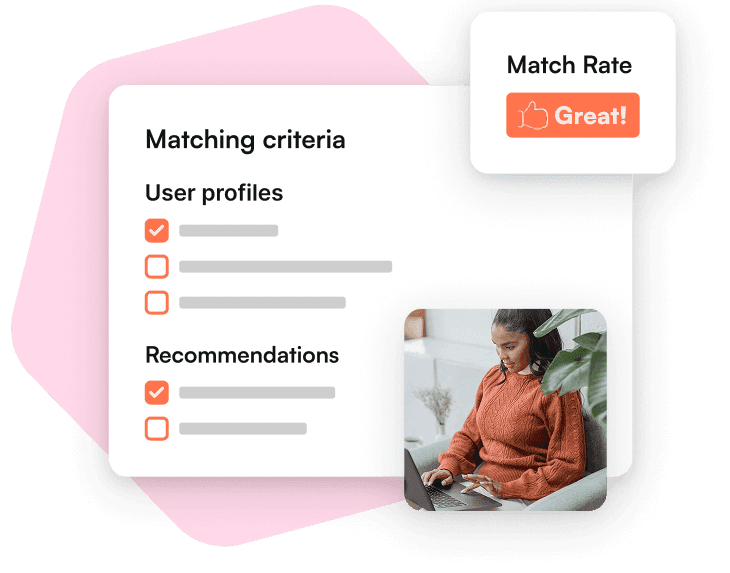
Chronus’ AI-powered matching technology for mentorship, peer learning or change programs enables automated recommendations for matches. Enable participants to take ownership of their connections with the right matching criteria, including:

  • Development goals, skills gaps or assessed job competencies
  • Participant status, job level, availability and many others
  • Topical expertise, shared interest or language fluency
  • Gender, ethnicity, background and location for inclusive mentoring

How AI matching works in mentoring programs

AI-powered mentor matching uses what people share in their profiles, such as development goals, skills and experience, to suggest mentor and mentee pairs that fit your program. The program admin decides which criteria matter and how much each one counts; the software compares possible pairs against them and recommends the strongest fits; then mentees choose or admins assign. Rumi Match builds these recommendations with Chronus’s AI-powered MatchIQ® algorithm, customizable to your program’s specific needs.

  • Collect rich profiles

    Every match starts with data. Mentors and mentees describe their role, experience, development goals, skills, interests, availability, location and languages, and basic fields like job level can come straight from your HR systems. In Rumi Match, participants create their own profiles in minutes, or profile data is imported from an HRIS, LMS or other database.

  • Set the criteria for this program

    The admin decides what a good match means for the program’s goal and how much each factor counts. A new-manager program might weigh leadership experience most; an upskilling program, the mentee’s skill gaps against the mentor’s expertise. Rumi Match criteria include development goals, skills gaps, assessed job competencies, participant status, job level, availability, topical expertise, shared interest, language fluency and location.

  • Score possible pairs and suggest the best fits

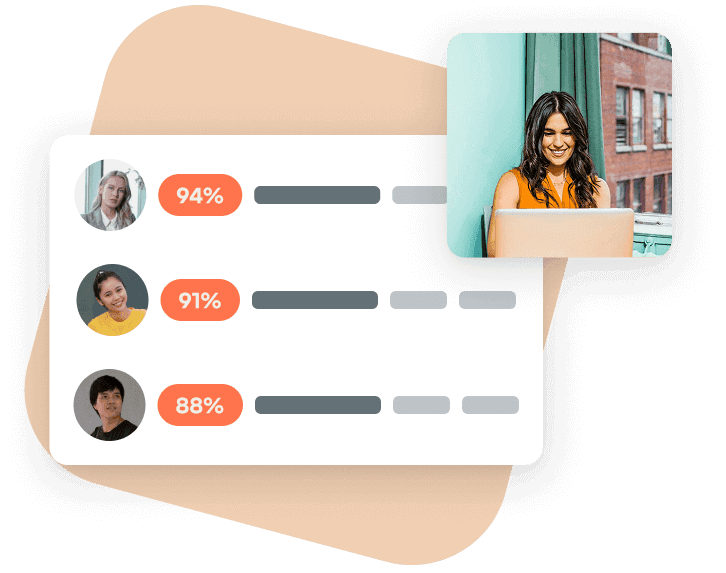
    The software compares each mentee with every available mentor against those criteria and ranks the strongest fits. This is where AI saves the most time: 200 mentees and 100 mentors make 20,000 possible pairs, far too many to weigh by hand. Rumi Match turns this into AI-powered recommended matches, and in Rumi Mentor every suggested match shows why: shared goals, skills to grow, experience to learn from.

  • Let mentees choose, or let admins assign

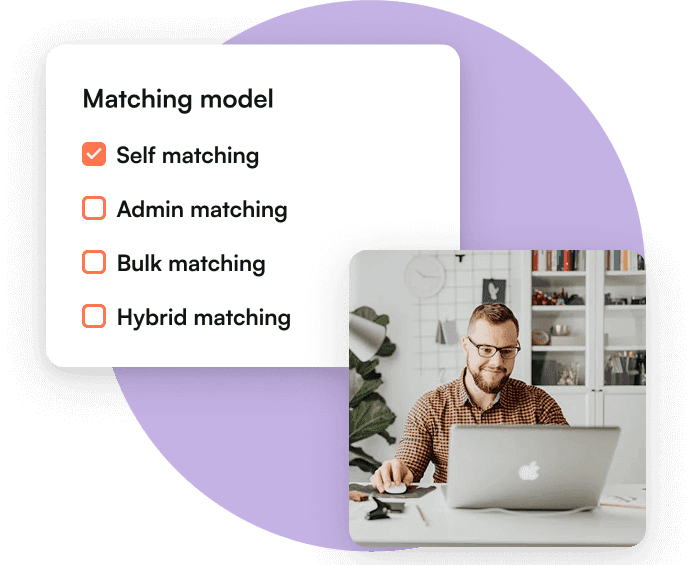
    People make the final call, in one of four models. In self matching, mentees choose from their recommended mentors. In admin matching, the program team creates the pairs. In bulk matching, admins match a large group at once. Hybrid matching combines them, for example letting mentees choose first while admins match anyone left. Rumi Match supports all four, for mentor and mentee or peer-to-peer programs.

  • Learn from every match

    Matching does not end when pairs are made. Track whether pairs meet, ask both people how it is going, rematch quickly when a pair stalls, and use what you learn to refine the criteria for the next round. Rumi Mentor’s AI learns from every match in your program, and Rumi flags a match that’s gone quiet before it fizzles out.

Multiple matching models

Multiple matching models

Choose your preferred matching style. Chronus software supports several matching types and models.

  • Self matching
  • Admin matching
  • Bulk matching
  • Hybrid matching
Built with belonging in mind

Built with belonging in mind

Create inclusive connections and matches with features focused on removing unconscious bias and breaking down silos. Work with thought leaders and innovators to build and share best practices when creating and managing inclusive programs for mentoring, change adoption, and more.

What program admins control

Ditch the spreadsheets and start matching partners in minutes, on the criteria your program cares about, with matches your team can explain.

  • The matching model for each program: self, admin, bulk or hybrid matching
  • The matching criteria, from development goals, skills gaps and assessed job competencies to job level, availability, language fluency and location
  • The MatchIQ® algorithm, customized to your program’s specific needs
  • Where profile data comes from: profiles participants create themselves, or an import from your HRIS, LMS or other database
  • The kind of matching: mentor and mentee, or peer to peer, for mentoring, social learning or change adoption programs
  • Program health in the Admin Dashboard: enrolled users, published and unpublished profiles, and program match rate

Questions about mentor matching

How does AI matching work for mentoring?

AI-powered mentor matching compares mentee and mentor profiles against criteria the program sets, such as development goals, skills gaps, experience, availability and location. The software scores possible pairs and recommends the strongest fits; then mentees choose, or admins assign. Rumi Match makes these recommendations with Chronus’s AI-powered MatchIQ® algorithm, customizable to your program’s specific needs.

What data does Rumi Match use?

Rumi Match uses participant profiles. People can create their own profiles, or profile data can be imported from an HRIS, LMS or other database (see Chronus integrations). Matching criteria include development goals, skills gaps, assessed job competencies, participant status, job level, availability, topical expertise, shared interest, language fluency and location, and you choose which ones fit each program.

Can program admins control or override matches?

Yes. Admins choose the matching model, set the matching criteria and customize the MatchIQ® algorithm to the program. With admin matching, the program team creates pairs on participants’ behalf, which suits hand-picked programs such as leadership development or high-potential programs. With bulk matching, admins match a large group of participants at the same time.

Can people choose their own mentor?

Yes. In self matching, mentees browse their recommended mentors and choose who to work with. Hybrid matching combines self matching with admin or bulk matching, so people who want to choose can, and the program team matches the rest. For when each model fits, see how to match mentors and mentees.

How long does matching take?

Once profiles are in, Rumi Match lets you start matching partners in minutes, not the weeks a spreadsheet can take. The slower part is usually getting everyone to complete a profile, so set a sign-up deadline and pre-fill what you can from your HR systems. A new program on Rumi Mentor takes 2-4 weeks to launch, with a dedicated Customer Success Manager and Implementation Manager.

How is AI matching better than spreadsheets?

A spreadsheet works for a pilot of a few dozen people. As a program grows, the number of possible pairs multiplies, and manual matching gets slow, inconsistent and hard to explain. AI matching applies the same criteria to every participant, recommends matches in minutes and shows why each pair fits, so admins spend their time on the exceptions. For the rest of the setup, from goals to measurement, see our mentorship program guide.

Two colleagues laugh together in an office corridor

Ready to See the Chronus Platform for Yourself ?